Digital Desk |
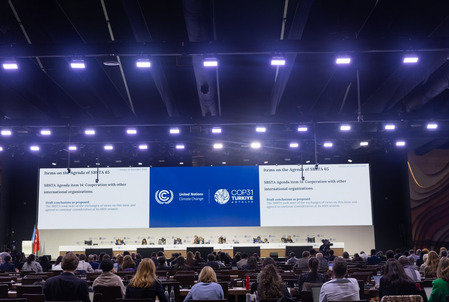
Antalya (Turkey), Nov 15 (IANS) The 31st Conference of the Parties to the United Nations Framework Convention on Climate Change (COP31) has entered a decisive phase in Antalya, following a week of intensive discussions and technical negotiations, but exposed significant differences over the direction and ambition of global climate action.
While negotiators from nearly 200 countries made progress on some technical issues, a substantial package of outstanding matters has been carried forward to the high-level discussions in the final week.
While the EU, UK, Japan and Canada sought stronger links to Global Stocktake outcomes, India, China, Arab and African Groups insisted on nationally determined climate action and finance for implementation. Technical negotiators have narrowed down some of the options, but ministers must now provide political direction, find compromises and work towards decisions that can command support from countries with competing priorities.
Now, the attention is shifting towards high-level ministerial discussions, with governments under growing pressure to turn ongoing negotiations into concrete agreements on climate finance, adaptation, mitigation and a just transition.
During the first week, delegates focused on advancing discussions across several key areas, while thematic dialogues highlighted the importance of connecting climate action with people’s everyday lives. Discussions also placed particular emphasis on children and young people, climate education, youth leadership and the role of education systems in strengthening climate resilience and supporting both mitigation and adaptation efforts.
Addressing a press summit, UN Climate Change Executive Secretary Simon Stiell urged countries to accelerate progress on the most challenging negotiating issues and avoid tactical delays that could undermine the conference’s outcomes. He also stressed the need to make climate action more relevant to communities, pointing to the potential of sports, entertainment and culture to engage wider audiences and build public support for climate action.
Meanwhile, technical negotiations continued throughout the week on several central elements of the climate agenda. These included climate finance, the Global Goal on Adaptation, mitigation, just transition and carbon markets. These discussions are particularly significant as developing countries continue to seek stronger support to address climate impacts, strengthen resilience and advance their transitions towards low-carbon economies.
The second and final week is expected to be crucial in determining whether the progress made so far can translate into meaningful political commitments. With ministers and senior government representatives expected to take a more prominent role, negotiations are likely to intensify as countries work to resolve outstanding differences.
Climate finance is expected to remain one of the most sensitive issues, particularly discussions on mobilising resources and ensuring that developing countries have the support needed to implement their climate commitments.
Negotiators are also expected to push for further progress on adaptation, including efforts to strengthen resilience and address the growing impacts of climate change.
Other key priorities will include advancing mitigation efforts, clarifying pathways for a just transition and addressing unresolved questions surrounding international carbon markets. Ministers will face the challenge of bridging differences between countries and finding common ground on issues that have remained difficult during the technical negotiations.
As COP31 approaches its closing days amid the gathering of leaders, scientists, civil society representatives, activists and others, the expectations are high for governments to demonstrate political leadership and deliver outcomes that go beyond statements of intent. The final week will therefore be a critical test of international cooperation and the willingness of countries to translate climate ambitions into practical action.
Observing that silence is not unusual, but it’s a little worrying, an observer, requesting anonymity, told IANS on Sunday, “A week into COP31 and there’s a definite sense of drift. The co-hosts are lying low, work on a main political and cover text seems a mess and levels of support for the 35 per cent by 2035 electrification deal are a mystery.”
The first draft of a possible agreement is expected to provide a basis for more intensive negotiations, although significant differences will need to be resolved before a final text can be adopted.
Responding to the outcome of the negotiations so far, Harjeet Singh, Global Convener, Fill the Fund campaign, told IANS here that the past week showed a familiar pattern: rich countries arrived with empty pockets and fossil fuel lobbyists in their delegations. Scaling up adaptation finance was pushed off the agenda on day one, and there has been no new pledge to the Loss and Damage Fund despite a monumental finance gap.
“The Just Transition Mechanism promised in Belém has been watered down overnight into a knowledge hub and an annual meeting. Workers and communities cannot eat reports,” he said.
For the final week, Harjeet Singh observed a time-bound plan to triple adaptation finance to at least $120 billion a year, with clear milestones and grants rather than loans. “It means new pledges to fill the Loss and Damage Fund, so money reaches communities that are already counting their losses. It means a just transition mechanism with real money and a real mandate. And a cover decision that commits countries to the fossil fuel transition roadmap and backs electrification powered by renewables, not gas. Anything less will be a COP (Conference of Parties) of bluster, and frontline communities will pay for it.”
Prime Minister of Solomon Islands, Matthew Wale, said that “climate change is not something we read about in reports. It is something our people live with every day. Saltwater is creeping into our wells, king tides are washing through homes, and families are facing the painful question of whether they can remain on the land their ancestors called home.
“The Pacific did not create this crisis, but we will not stand by and wait for others to act. We may be a small island nation with limited resources, but we are determined to show leadership. That is why Solomon Islands is proud to make the first pledge to the Green Climate Fund’s next replenishment,” he said.
AT COP31, thousands of people from around the world converged at the Peoples’ Climate Summit, comprising Indigenous Peoples, social and environmental movements, peasants, and affected communities, and marched through the streets of Antalya demanding climate justice.
As COP31 approaches its scheduled conclusion on November 20, the pressure is mounting on governments to demonstrate that multilateral climate cooperation can deliver more than declarations of ambition. The central question facing ministers is whether they can move beyond competing national positions and reach a common political understanding that translates climate commitments into concrete action.
The outcome of the final week will be a crucial measure of both the ambition and effectiveness of the Antalya negotiations.
(Vishal Gulati can be contacted at [email protected])
Leave a Reply