Digital Desk |
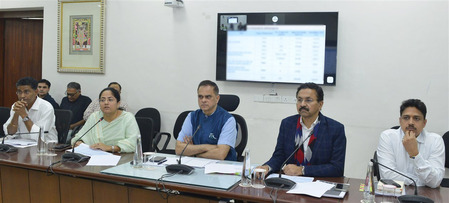
Jaipur, Nov 13 (IANS) Rajasthan Chief Secretary V. Srinivas held a meeting with a delegation from UNESCO to discuss the implementation of a globally recognised course on the Ethics of Artificial Intelligence (AI), aimed at strengthening the knowledge, skills and competencies of public officials in the effective, ethical and responsible use of AI in governance and public administration.
The proposed course, designed by UNESCO, seeks to equip government officials with the necessary understanding of emerging AI technologies and their practical applications in governance. It will focus on building institutional capabilities to harness the potential of AI while ensuring that its adoption remains ethical, transparent, accountable, inclusive and aligned with public interest.
The course will also familiarise officials with the opportunities and challenges associated with the use of AI in government functioning, including its role in improving administrative processes, enhancing decision-making and strengthening public service delivery.
Emphasis will be placed on developing an understanding of responsible AI practices and ensuring that technological advancements are adopted with due consideration for ethical principles and governance standards.
The initiative is aligned with the objectives of the Rajasthan AI/ML Policy 2026, which envisages promoting the adoption of Artificial Intelligence and Machine Learning across various sectors, including government administration.
The collaboration with UNESCO is expected to provide public officials with access to globally recognised expertise and learning resources, enabling them to better understand and apply AI-based solutions in their respective areas of work.
The initiative is expected to strengthen the institutional capacity of the State Government, promote informed and responsible use of emerging technologies and facilitate the integration of AI into governance processes.
It will also contribute towards making public administration more efficient, responsive and citizen-centric, while ensuring that technology-driven interventions remain guided by ethical considerations and public welfare.
Leave a Reply